




Approvals matrix

Table of contents

An approval matrix is a table that defines the business rules for routing an approval task through a process based on preset conditions — such as amount, department, or location. It ensures the correct individuals with the appropriate approval authority are involved in decision-making at the right time. It’s sometimes referred to as a “schedule of authority” or “authority matrix.”
What is an approval matrix and how does it work?
An approval matrix is a powerful decision-making tool designed to manage approval workflows within a business. It serves as a visual representation of the rules and hierarchies that dictate who has the authority to approve various projects and tasks. By clearly outlining these roles, an approval matrix ensures that all approvals follow established policies and standardized processes, making it indispensable for managing everything from transactions to complex projects.
The approval matrix operates on a straightforward principle: It uses an “if x then y” formula to establish clear regulations. These rules can vary based on factors such as the amount of a purchase, the type of project, or the specific stage of the process. By defining who is responsible for approving specific tasks and the corresponding timelines, businesses can streamline their approval processes, reduce confusion in task delegation, and ensure a smooth and efficient workflow.
What are the benefits of using an approval matrix?
Implementing an approval matrix in your business can yield numerous benefits, including:
- Gain clarity over spending — By clearly outlining who is responsible for approving specific tasks and the associated timelines, an approval matrix provides transparency and control over business expenditures.
- Establish accountability — Designating authority over different projects and tasks ensures that everyone knows their responsibilities, fostering a culture of accountability.
- Consistent decision-making — An approval matrix promotes uniformity in decision-making across various tasks and projects, ensuring that all actions align with company policies.
- Time savings — Streamlining the approval process helps avoid delays and confusion, saving valuable time for all involved.
- Enable efficient workflow — By clearly defining approval responsibilities and timelines, an approval matrix facilitates a more efficient workflow.
- Avoid confusion — Clearly designating who has authority over different projects and tasks helps prevent misunderstandings and ensures that the right people are involved at the right time.
What are the types of approval matrices?
There are several types of approval matrices, each tailored to specific business needs. The three most common:
| Type | Routing structure | Typical rule | Best for |
|---|---|---|---|
| Purchase approval matrix | Hierarchical — escalates by level | Monetary value (e.g. department head, then VP of Finance above a threshold) | Procurement, expenses, CapEx |
| Project approval matrix | Parallel — multiple approvers review simultaneously | Consensus across stakeholders | Project kickoffs, cross-functional initiatives |
| Content approval matrix | Sequential — draft reviewer, then final authority | Expertise and sign-off ownership | Published content, brand and legal review |
Approval matrix example
Let’s take a look at an example of where an approval matrix can be used. An expense request needs to be routed to the appropriate approver based on a variety of conditions like:
- Office Location
- Amount of Expense
- Type of Expense
- Month Submitted
- Cost Center Owner
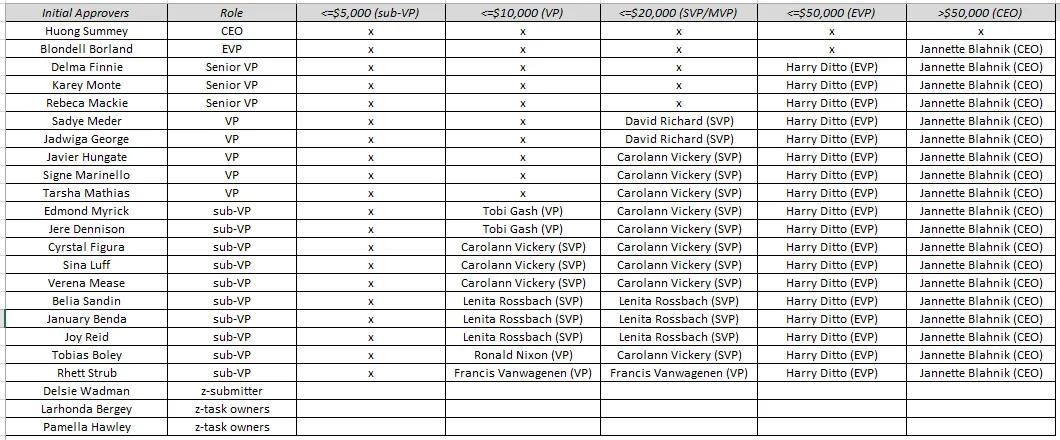
An example of an approvals matrix based on dollar amount.
How is an approvals matrix used in workflow automation?
An approval matrix can drive the assignment of requests and approvals in an automated process to provide the process engine with the logic to route information appropriately.
It can also be quickly changed/edited to reflect the changing nature of the organization, staff changes, new policies, etc. In complex approval processes, this speed can be critical to preventing mistakes and delays.
Overcoming approval bottlenecks
Approval bottlenecks can significantly slow down business processes, but they can be effectively managed with the right strategies. One of the most effective solutions is the use of automation tools to streamline the approval process. These tools can reduce the learning curve for new staff, enable faster approvals, and provide quicker responses to any disputes that arise.
Additionally, implementing customizable spending controls tailored to each employee’s needs can further expedite the approval process. By integrating automation tools into existing systems, businesses can enhance efficiency and minimize bottlenecks, ensuring a smoother and more responsive approval workflow.
How do you implement an approval matrix?
To back up a bit, depending on the nature of the approval chain or schedule of authority, a process may require several different logic steps. For instance, there may be a dollar amount rule (requests for more than $50,000 route differently) and then a geographic rule (specific states route differently) and finally a department rule (each department has a specific approver assigned).

While the example above shows a large table of approval logic, depending on the circumstance, you might use a combination of lookup tables and dynamic assigners and static rules to find the appropriate approver.
Or, based on your documented business requirements, you might just implement the approval routing using sets of rules at appropriate points in the process. This makes more sense when the matrix of approvals is fairly simple. Implementing a new approval matrix can significantly enhance organizational efficiency by improving visibility and collaboration, especially when integrated with automated tools.
Best practices for approval matrix management
To manage an approval matrix effectively, businesses should adhere to the following best practices:
- Clearly define the approval process and authority — Ensure that the approval process is well-documented and that everyone understands their roles and responsibilities.
- Establish a clear hierarchy of approvers — Create a structured hierarchy to streamline the approval process and avoid confusion.
- Set up a system for tracking and managing approvals — Implement tools and systems to monitor the progress of approvals and ensure timely completion.
- Ensure stakeholder understanding — Make sure all stakeholders are aware of the approval process and their specific roles within it.
- Regularly review and update the approval matrix — Periodically assess and update the approval matrix to keep it relevant and effective in light of organizational changes.
By following these best practices, businesses can ensure that their approval matrix is a valuable tool for managing approval workflows and promoting efficient decision-making.
FAQ
An approval matrix is a table that defines the business rules for routing an approval task through a process based on preset conditions, such as amount, department, or location. It ensures the correct individuals with the appropriate authority approve each request. It’s also called a “schedule of authority” or “authority matrix.”
A purchase approval matrix routes expense requests by rules such as dollar amount, office location, and cost center — for example, requests above $50,000 escalate from the department head to the VP of Finance, while smaller amounts are approved at the department level.
The approval matrix is the rule table — who approves what, under which conditions. The approval workflow is the running process that applies those rules to route each request. In workflow automation, the matrix supplies the routing logic the process engine executes.