We moved our brand guidelines to GitHub


Table of contents
We moved our brand guidelines out of static documents and into a GitHub repository that an AI model can read and apply. This post covers why we did it, how it works, and what it can’t do.
The questions we kept asking ourselves
What does it mean to be a designer in the age of AI? How far can we push it to produce great results — and where should designers focus their time as a result?
We’ve spent a lot of time thinking about how our work is evolving. For a long time, the output — the file, the screen, the deliverable — had become a stand-in for the discipline itself. Now that AI can produce those outputs instantly, the underlying question becomes impossible to ignore: Was that ever really the job?
We don’t think so. Design is judgment. It’s understanding what problem we’re actually solving, which tradeoffs matter, and what the person on the other end needs to understand or do.
AI works probabilistically, predicting what’s most likely to come next based on patterns in data. The result tends toward the expected: what’s common, familiar, and already seen. That’s useful, but it also means the output often converges on the average.
When everyone can produce something acceptable in seconds, distinctiveness becomes the real challenge.
Strong design doesn’t come from the average. It comes from intent. It’s the deliberate act of expressing a company’s strategy, positioning, and priorities in a way people can recognize and remember. Different designers may arrive at different solutions to the same brief, but the best ones are aligned in purpose: They communicate the right thing, in the right way, for that specific context.
Good designers don’t make decisions from taste alone. They make subjective decisions in service of something larger. Building a brand is less like expressing yourself and more like shaping a person — one with a defined point of view, a consistent way of showing up, and, over time, their own recognizable preferences. The role of the designer is to build and evolve that “person” so that every expression reinforces who they are and what they stand for.
We’re often reminded of something a professor once told us: The difference between an artist and a designer is who the work is for. An artist solves their own problems. A designer solves someone else’s. That distinction matters here. Design isn’t about personal expression — it’s about clarity, communication, and making deliberate choices on behalf of a brand and its audience.
Humans bring that intent. We decide what matters, what to emphasize, and what to leave out. We build systems, like brand guidelines, that reflect those decisions. These systems aren’t probabilistic; they’re the result of explicit choices about how a company shows up in the world. AI can apply those systems, but it doesn’t define them. It doesn’t originate the point of view behind them.
That’s the core difference: AI can generate, but it doesn’t choose with intent. It can approximate, remix, and assist, but it doesn’t establish direction. And direction is what makes something distinct instead of interchangeable.
We’re a lean design team at Nutrient, and like most lean teams, we can’t be everywhere. But that’s never stopped us from believing that every brand touchpoint should meet a high standard. The question was how.
The bottleneck no one talks about
Brand consistency is hard to scale. The bigger a company gets, the more people touch brand materials — and the more opportunities there are for things to go wrong. Fonts get swapped. Colors drift. Layouts break in subtle ways that non-designers don’t catch but everyone subconsciously notices.
We had brand guidelines. We had templates. But guidelines are static documents — they describe how things should look but don’t help us execute at speed. And templates only work if we know which one to pick and how to adapt it correctly. That’s design judgment. It doesn’t come with the template.
The result: Designers become a bottleneck. Everything that needs to be on brand has to pass through us. That’s not scalable, and it’s not the work we want to be doing.
What we actually tried to solve
We didn’t start with a grand vision. We started with a simple, honest frustration: No one likes spending hours laying out presentations. We wanted to automate the tedious, predictable work so we could focus on more challenging, more meaningful problems.
We tried image generators. The results weren’t good enough — too unpredictable, too hard to keep on brand. What we needed wasn’t more generation power. We needed more control.
So we asked a different question: What if we gave a large language model (LLM) everything it needed to understand our brand — not just visually, but structurally — and let it generate materials from that?
Building the system
The key insight came from our background in design systems. Most of our team are generalists with experience building them, and we’d already applied design system thinking to our brand: semantic color tokens, structured typography, defined layout patterns. Our visual language wasn’t just aesthetic. It was already organized like a system.
That meant we could translate it into rules. They weren’t vague mood-board rules, but precise, explicit ones: which colors serve which purposes, how layouts adapt to different content types, when to use which components. Everything that previously lived in Figma files and in our heads was written down as .md files.
All of it lives in one repository: a single source of truth, hosted on GitHub — because that’s where our company lives. It gave us versioning, history, transparency, and a place everyone already knows how to navigate. It contains everything: brand rules, icons, pictograms, color tokens — and a photo library where every image is auto-tagged by a script, so the LLM can choose the right photo for the right context without guessing.
When an LLM has access to all of that, it stops guessing and applies the system the way a designer would.
How it works in practice
A team member clones the repository locally. A README walks them through example prompts for common use cases. They run the prompts through Claude, and it generates on-brand output that’s structured and ready to use or refine.
For some use cases, we’re building a UI to make it accessible to people who don’t want to touch a terminal.
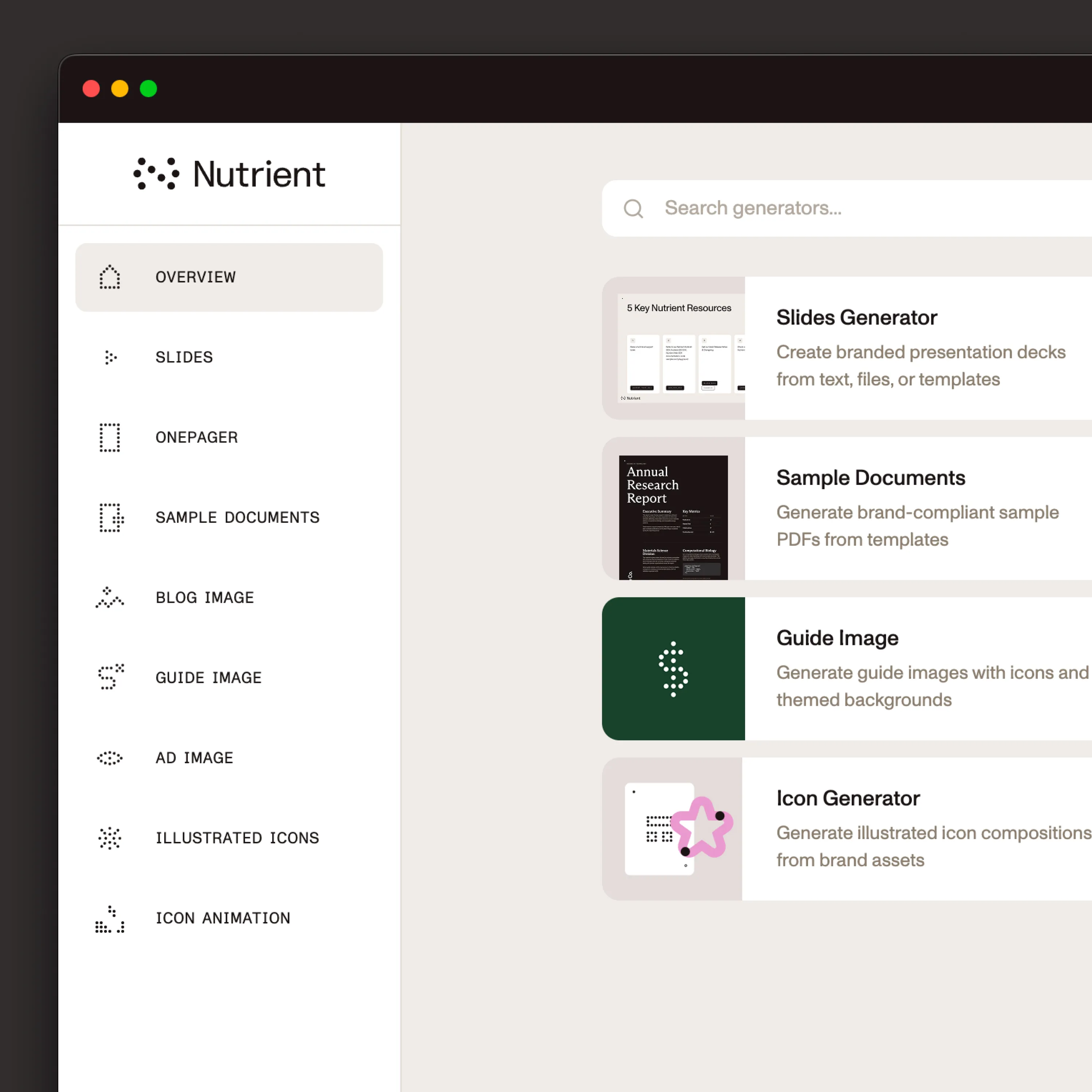
What it can produce right now:
- On-brand HTML slides, pulling visuals, icons, and pictograms from our library — exportable to PDF
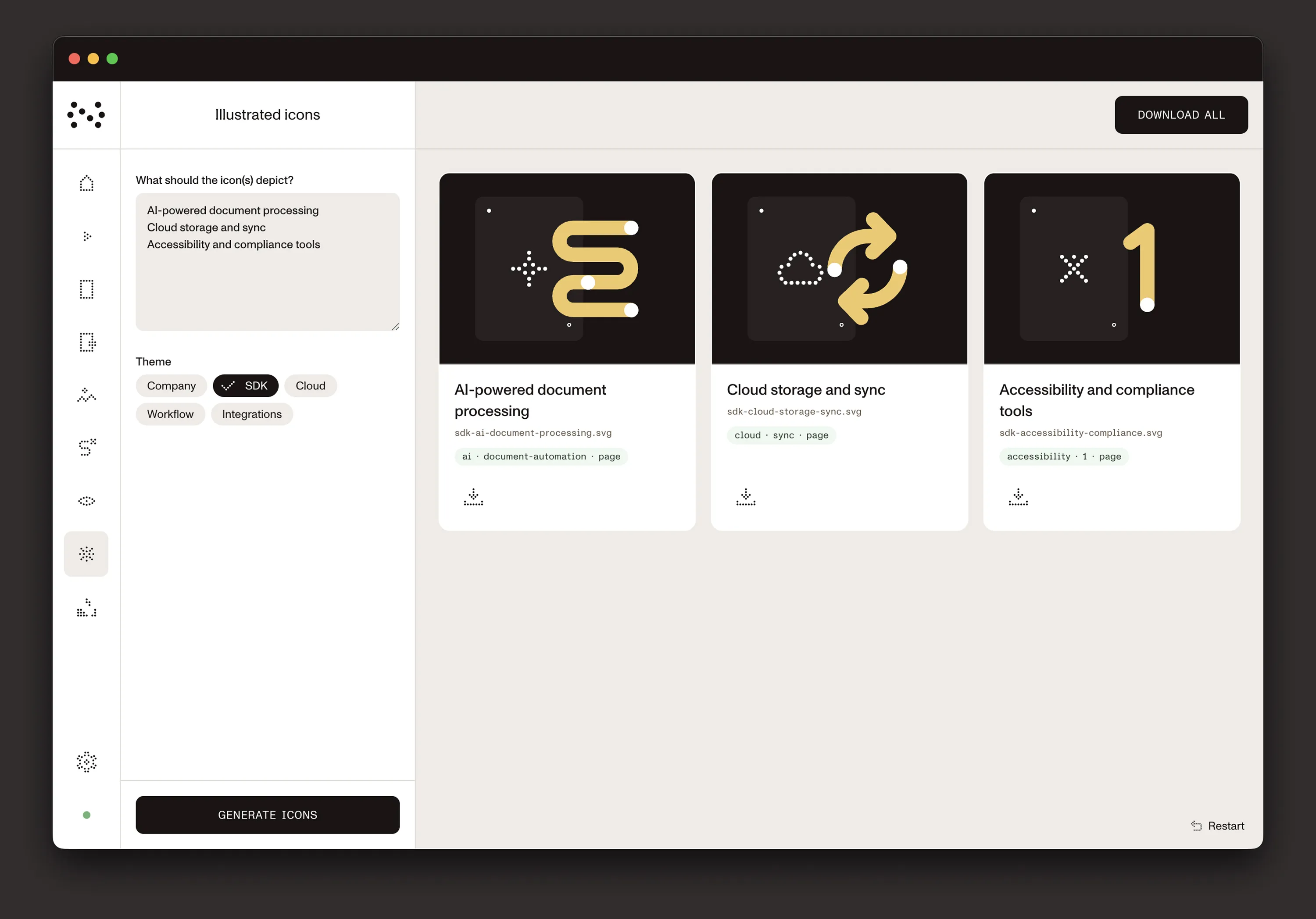
- Pictograms composed of multiple elements
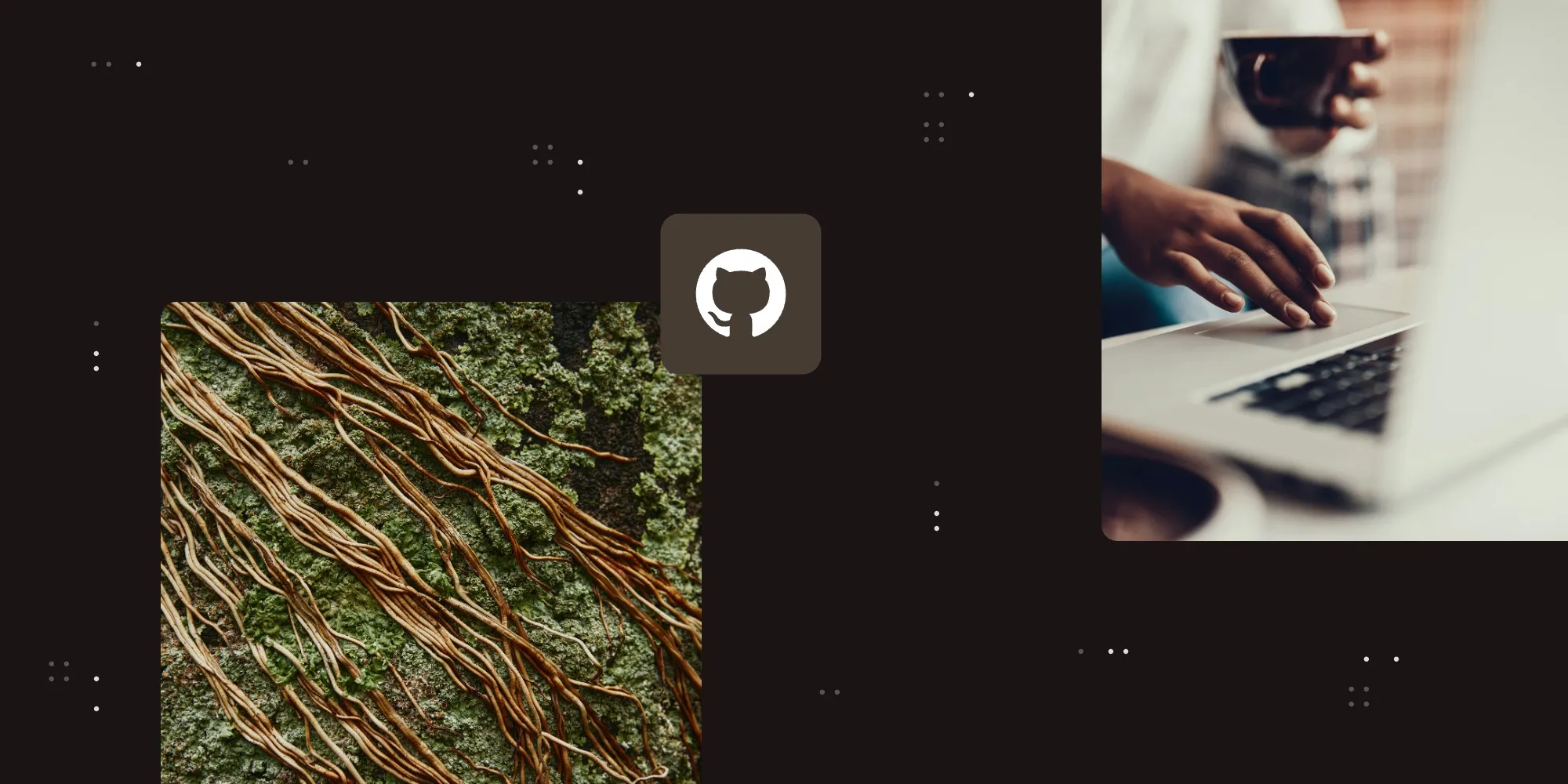
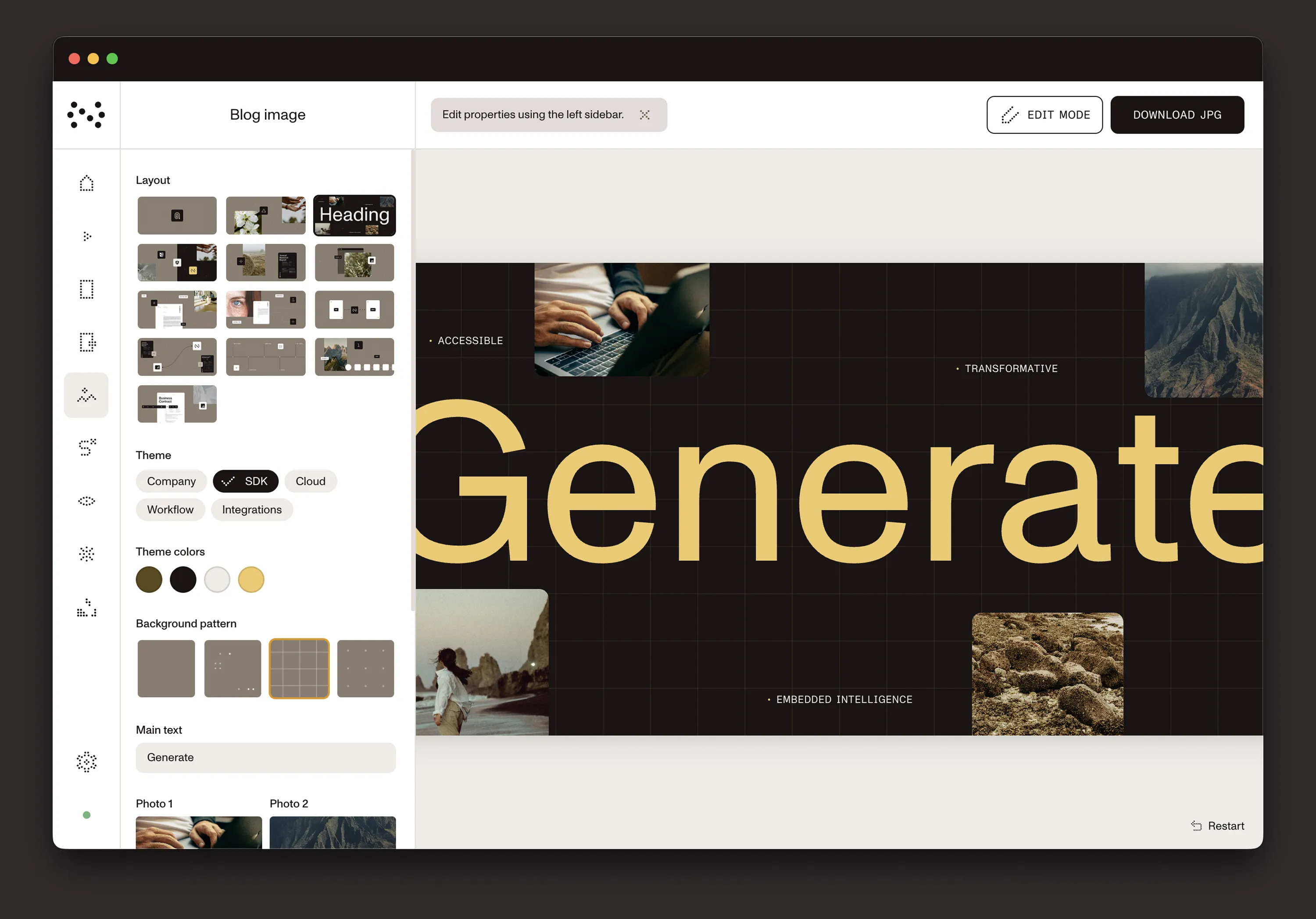
- Blog header images based on established layout patterns — including the one at the top of this article
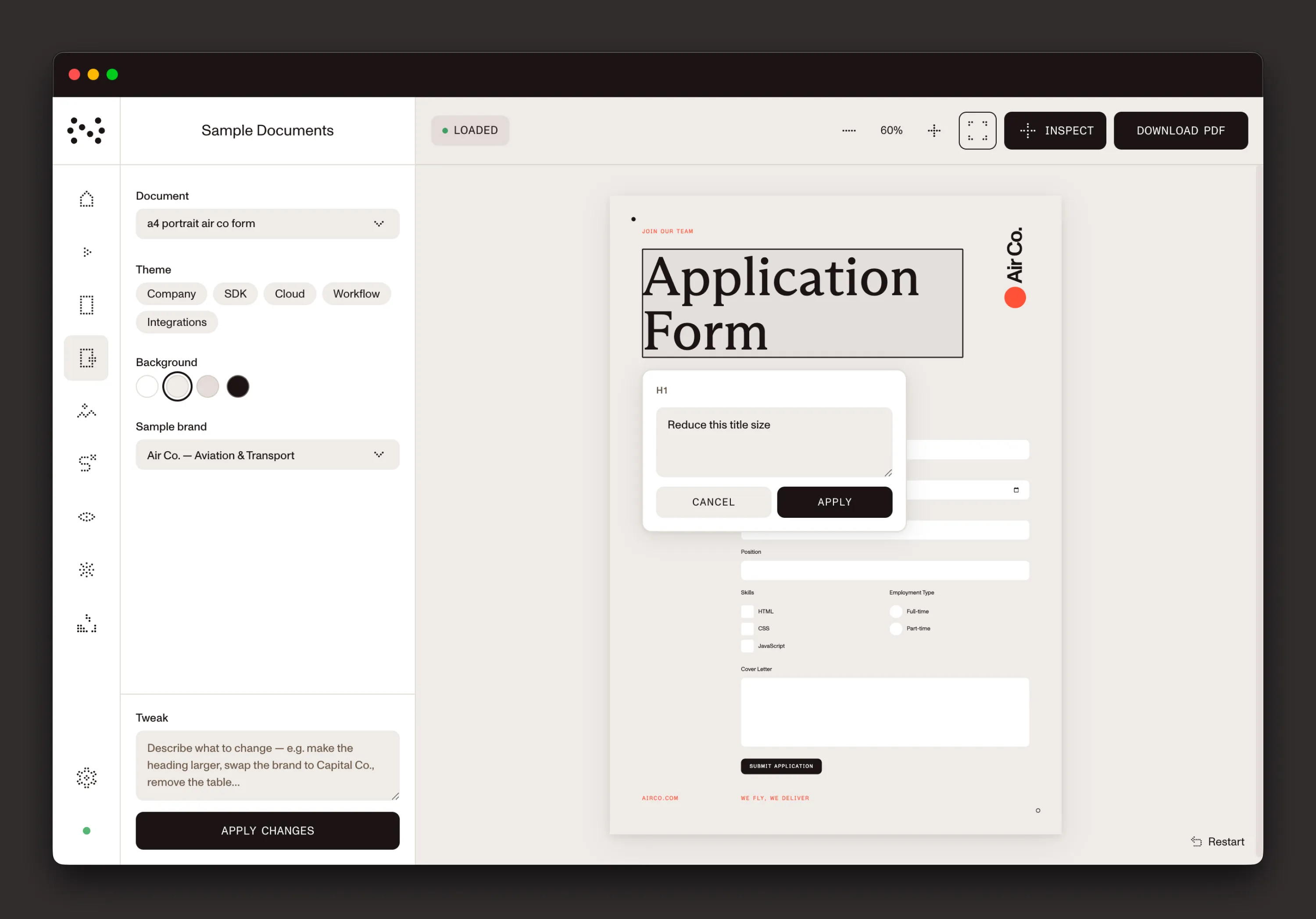
- On-brand documents — including samples tailored to specific industries and use cases
Here are three more of the generators in action.
What it can’t do (and why that’s fine)
AI handles the predictable but not the nuanced: fine details, optical corrections, genuine creative decisions, compositional judgment. Those still require a designer.
If automation gets us roughly 70 percent of the way there instantly, we’re no longer spending our time on the repetitive work; we’re spending it on the 30 percent that actually requires human judgment. And every time we solve something in that 30 percent, we feed it back into the system — so next time, it’s covered automatically too.
The designer’s role moves upstream rather than disappearing. Instead of producing individual assets, we’re designing the system that produces them.
What this made us realize
The gap between brands is going to widen. Organizations that invest in structure — real structure, not just a style guide PDF — will be able to produce consistently great work at a scale that others simply can’t match. Those that don’t will keep producing inconsistent materials, slowly, with too many people involved.
This approach isn’t unique to us. Any team that takes the time to make their brand system explicit and structured can build something like this. The technology is available. What it requires is design system thinking applied to brand — and the willingness to write everything down.
We’re still early, but we’re optimistic. And if this process reminded us of one thing, it’s that constraints have always been one of the best catalysts for creativity. Working within a defined system doesn’t limit creative thinking — it focuses it. That’s the part that excites us most.