Search
Control how document work runs
Ground results, validate operations, and route work with rules your document agents can follow.
- Lufthansa
- Disney
- Autodesk
- UBS
- Dropbox
- IBM
Build checks into execution
Ground results
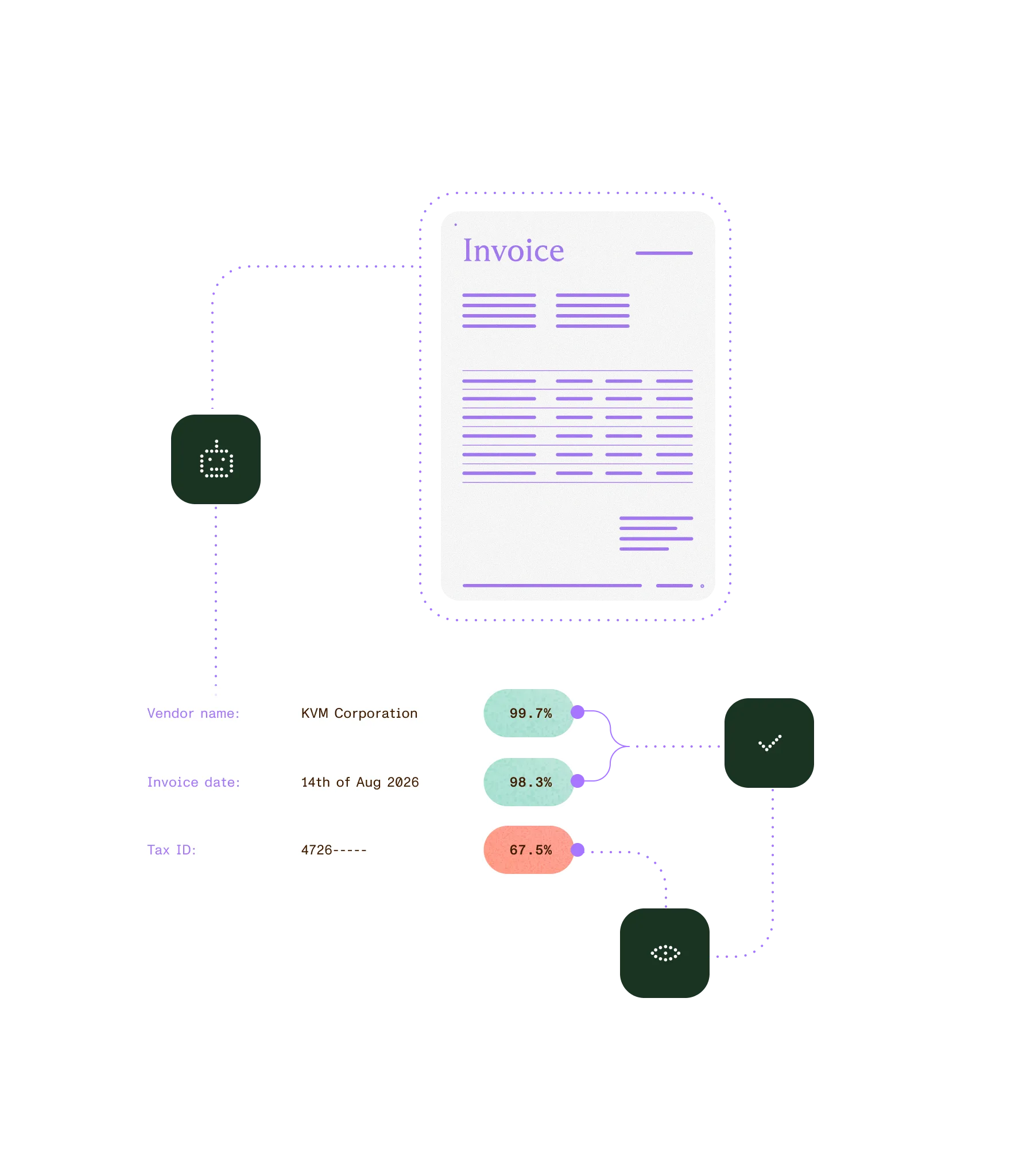
Data Extraction API connects values to source regions with match labels and confidence signals.
Learn moreValidate document edits
Document Authoring checks tool names, arguments, and current element IDs before applying requested changes.
Learn moreChoose models
Workflow Automation connects AI tasks to configured providers and pinned model versions.
Learn moreSet response limits
Workflow Automation sets token limits for AI responses to constrain output length and usage.
Learn moreRoute approvals and exceptions
Workflow rules use task status, form data, and approval choices to decide what runs next.
Learn moreControl document writes
Document Authoring can apply edits, stage tracked changes for review, or block writes through editor mode.
Learn more Example workflows
Capture, evaluate, and apply feedback with document context Then test changes before future runs.
A pattern built with document review events and your application’s evaluation process.
Person
Agent
Output
Extend the controls
Connect your orchestration
Use document evidence and review events with your model router, cost policies, and evaluation pipeline.
Grounding Review events Your stack Explore SDK docs
Shared agent governance
Governed memory, agent routing, a shared revision-history layer, and a document harness are in development.
Memory Routing Shared history Contact us
- SOC 2 Type 2 audited
- GDPR and CSA compliant
- 3,000+ organizations worldwide
- 15 percent of Global 500 companies
Frequently asked questions
Does deterministic execution guarantee a correct AI result?
No. Repeatable operations and schema checks do not establish semantic correctness. Source matches can reveal unsupported values, and Document Authoring rejects stale edit targets. Your workflow still needs checks for its task and source context.
Can I route work using extraction confidence?
Yes. Use source-match labels and calibrated confidence thresholds in your application or workflow rules. Confidence is a relative signal, not a probability; a missing score means no score is available.
Is governance a separate product?
Governance groups capabilities across Nutrient products. Use the linked product guides for availability, deployment, and integration details.