Why AI-native platforms keep buying their document layer instead of building it

Table of contents
Page reviews veterans’ disability case files, Current prepares taxes, and BriefPoint produces legal discovery. These three AI-native companies work in different industries, and each reached the same conclusion on its own: The document is where the product has to earn trust. Here’s why each chose to buy its document layer instead of building it.
Page: After several open source viewers, it stopped rebuilding
A veteran’s disability case file can run 4,000 to 5,000 pages, and up to 50,000 in extreme cases. Page turns those files into searchable case history, but every fact it surfaces has to lead practitioners back to the underlying source. After trying multiple open source viewers, with engineers maintaining custom forks and migrating between them again and again, Page chose a document layer it could stop rebuilding.
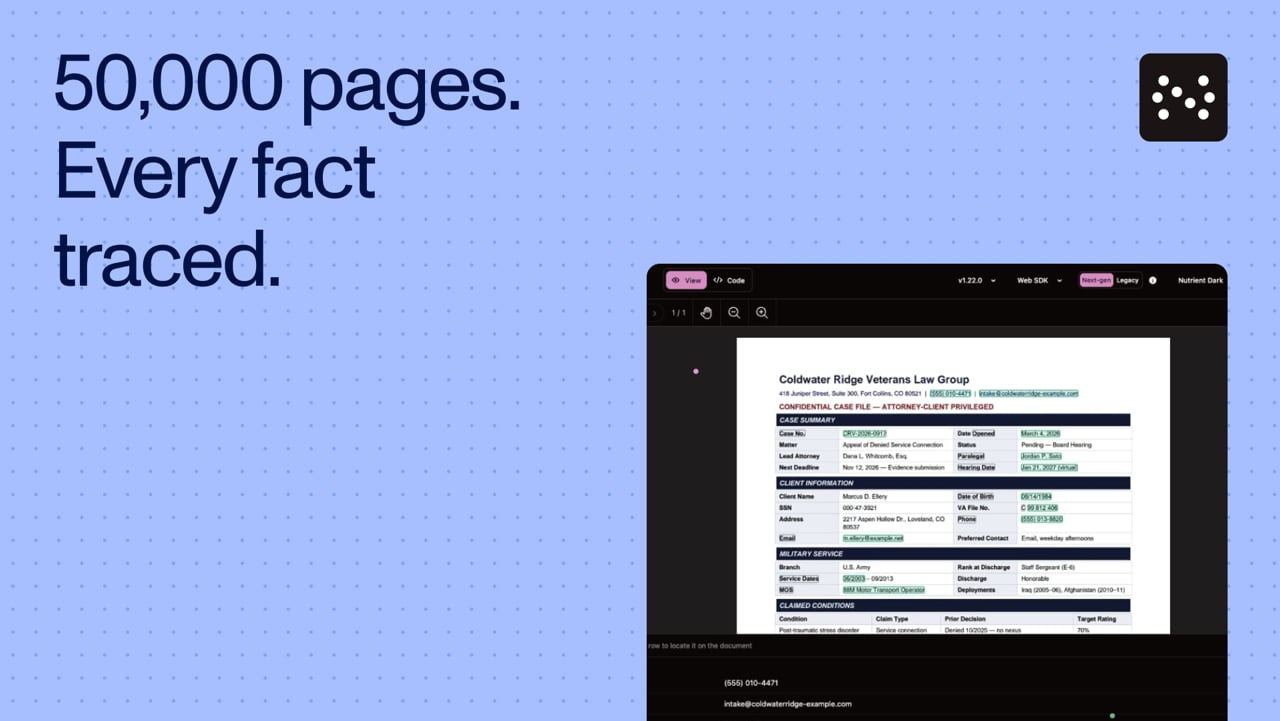
“The best part about it is I don’t have to think about it. It’s easy to implement, easy to maintain, and reliable.”
Current: Six weeks, two engineers, one AI tax platform
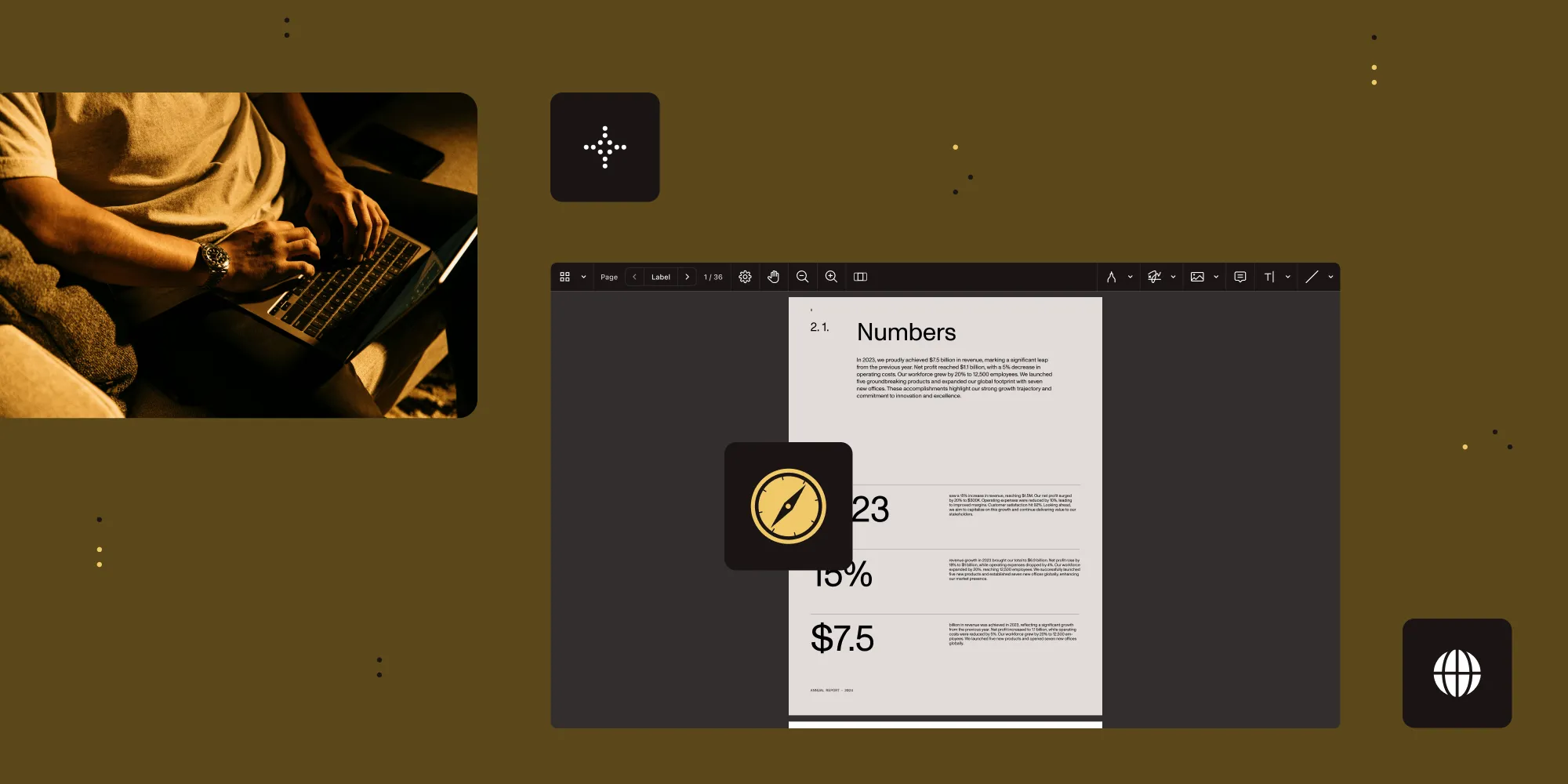
Current had six weeks and two engineers to deliver a working product for extension tax season, and a full production launch before the new year. Accountants need to reopen, edit, and preserve their calculation tapes, and the open source options didn’t handle that well. Nutrient’s document editing gave the team what those options didn’t.
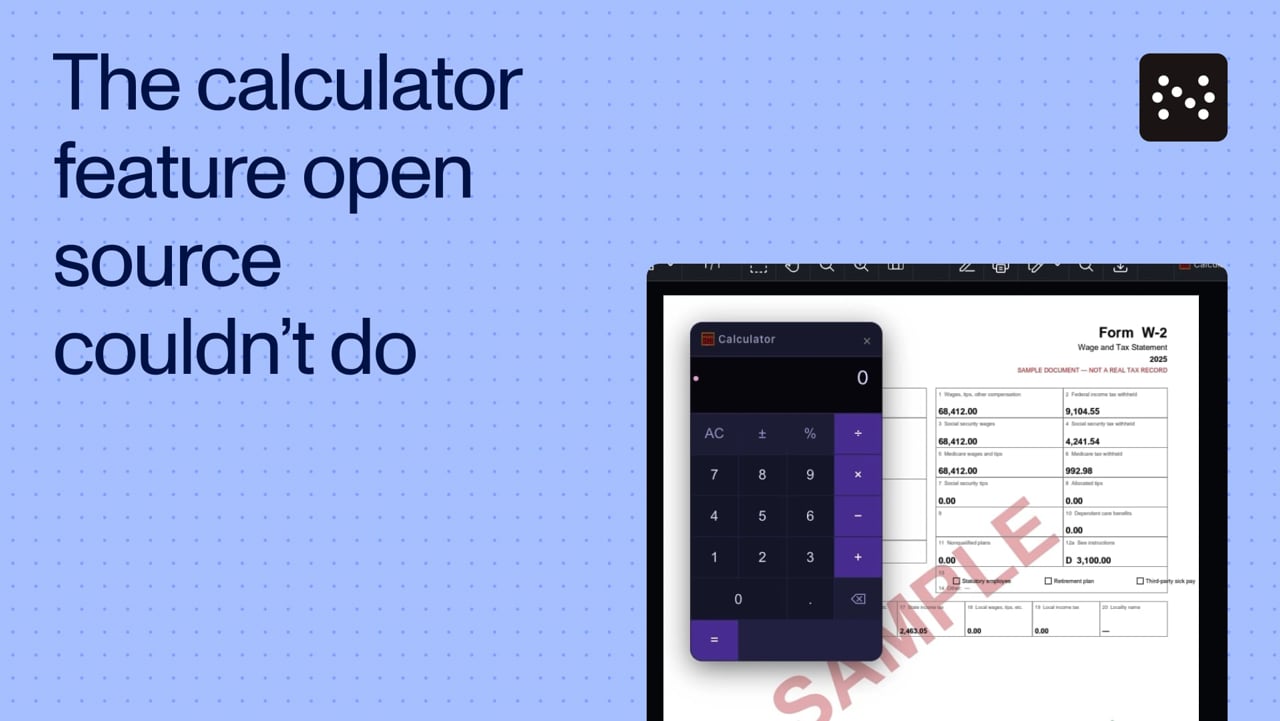
“This product wouldn’t work without document editing. Our entire tax automation product, we need some way to display documents. That’s a very core part of it.”
Read the full Current case study
BriefPoint: Claude wrote the integration
BriefPoint’s clients upload Word documents, images, emails, and even medical imaging containers, and attorneys rely on the resulting PDFs for discovery and court submissions. CTO Chris Maffin pointed Claude Code at Nutrient’s documentation and asked it to write a service that wraps the .NET SDK. It produced a working service on the first try, and within a single day, the team had documents converting in a local development environment.
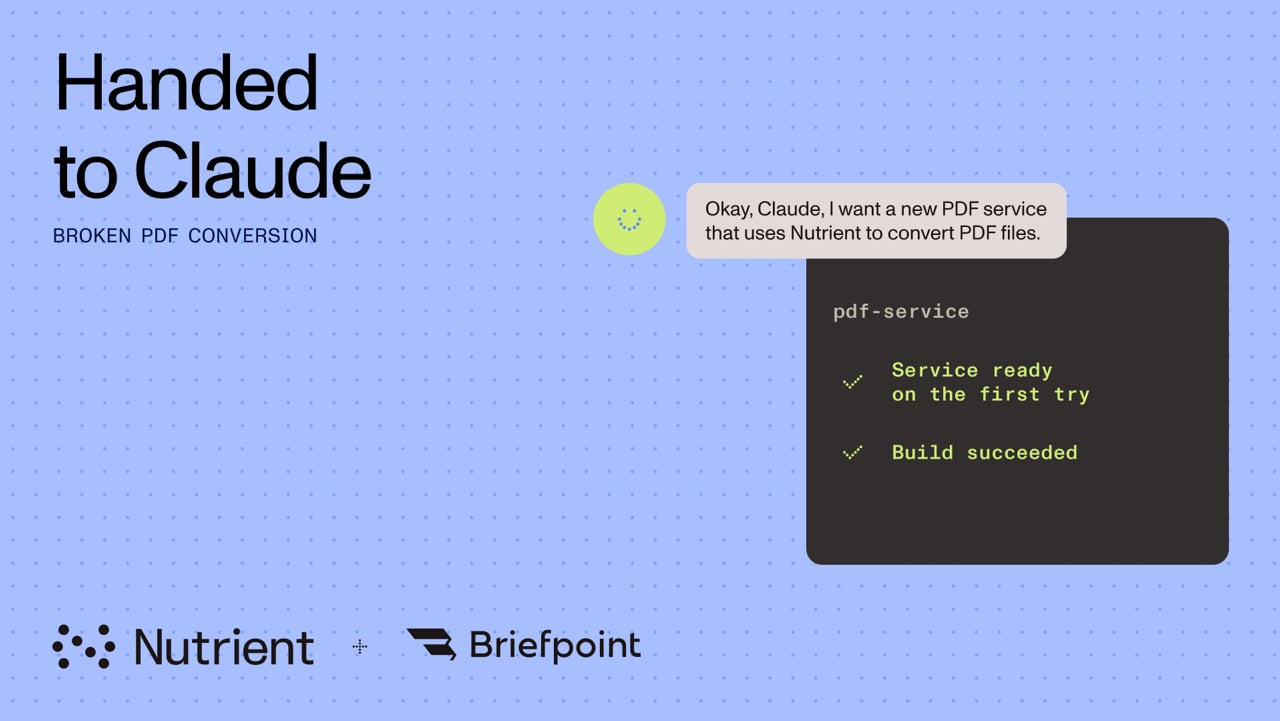
“Nutrient saves us an almost indefinite amount of dev time.”
Read the full BriefPoint case study
What the three have in common
The three stories point to the same two things: The AI depends on the document behind it, and buying the layer paid off for each team.
The AI depends on the document behind it
For Page, every fact the AI surfaces has to lead back to the underlying source, or practitioners have no reason to trust it. A viewer that drops or distorts a page undermines the whole product.
Current’s accountants need to “review, validate, and confidently trust AI-generated work.” That depends on documents they can reopen, edit, and preserve.
BriefPoint’s attorneys face the same test. Broken tables and dropped content produced PDFs they couldn’t trust to send to opposing counsel or courts.
What they got back
Page has begun exploring Nutrient Document Authoring SDK, with the goal of bringing a native, Word-like drafting experience into its platform. Current launched a production-ready AI tax platform in roughly four months. BriefPoint’s near-term expansions — redaction, PDF normalization, and HTML stamping — build on the same Nutrient integration already in place.
Build the product, buy the document layer
AI-native products are built around documents, so the document layer is part of the product. Page, Current, and BriefPoint spent their engineering time on the product and bought the layer underneath it. If you’re weighing the same call, see how agentic coding compares to buying.
Talk to Sales Explore the SDK